More than a Handmaid

tumblr_ojj1eujyrv1qa4l1ko4_540

Last night, after putting Sam to bed and catching up with Kyle and Kat about how their days went, I settled in to watch The Handmaid’s Tale on Hulu. The Handmaid’s Tale is one of my alltime favorite books, not just from a feminist perspective (which is hugely important, and I’ll get to that in a bit), but because Margaret Atwood is a fantastic writer, the kind I dream of being. She has such a remarkable command of the English language, and her prose is rich and engrossing. The Handmaid’s Tale is one of those books that, even when you just read a chapter or two, makes you wonder what day it is when you finally put it down; you’re that pulled into the world.

The story, for the uninitiated, features a dystopian world in which the abuse of religion in a political setting has led to severe oppression of women, who are seen as nothing more than various appliances, their function delineated by their societal caste, and their caste determined by their age and whether or not they have functioning ovaries.

In other words: their worth is 100% determined by whether or not they can have children.

A lot of other factors go into how women are treated in this society, but it all revolves around their fertility and behavior. If you’re infertile (as many women in this society are; the society doesn’t allow for the possibility of male factor infertility, which is a contributing factor in roughly a third of all infertility cases), your behavior is everything. “Good” women might get to be Wives; “bad” women are designated as Unwomen and sent to the Colonies to clean up radioactive waste until they wither away and die.

v0zrg
(I’m sorry, this isn’t funny at all, I’m a terrible person)

That said, a “bad” woman with functioning ovaries has a special role in this society, that of a Handmaid. The Handmaid’s only purpose in life is to conceive and bear children for Gilead’s high-powered men. She undergoes testing to monitor her menstrual cycle and, once a month, participates in a Ceremony, in which she lies on the Wife’s lap while her– well, let’s be honest. Her owner rapes her in the interest of conceiving a child. If she can’t conceive and deliver a living child over the course of two years, she’s assigned to another house. If she fails to conceive over the course of three separate assignments, she’s considered an Unwoman and goes where Unwomen go–to the Colonies, to die a slow, agonizing death.

It’s such a rich world, and I could honestly spend hours on end writing analyses of it, discussing it in its overall societal and historical context, marveling in horror that nothing that happens in the book hasn’t happened somewhere in our world at some point in history… but that’s been done. I wanted to talk about fertility and infertility and struggling to grieve my infertility as a feminist.

(yes, a super light topic for your Thursday; tune in next week when we discuss the nuances and nature of the soul and theories surrounding the nature of man based on readings from Plato and Aristotle that I will assign after class)

603-men-in-black-3-quotes

Part of the truth that The Handmaid’s Tale is set to remind us of is that women are not their ability to conceive and carry children. Throughout the course of history, in various settings (see: Henry VIII and his six wives, a desperate bid for a male heir that saw his rotation of partners not as individuals but as potential brood mares), the lie that women are only as good as their ability to procreate has been told again and again and again. We are not our ability to conceive and carry children.

We’re not even our desire or lack thereof to conceive and carry children. I have a bunch of friends who are childfree by choice, including Kat the Fantastic. They don’t want to have kids now or ever; they’d have the whole system removed, if they could (admittedly, so would I, if that wouldn’t make it… yanno, impossible to have biological kids). Some of them talk about maybe eventually mentoring or adopting older children and teenagers about to age out of the system, but most of them are perfectly content to live their lives without ever raising a child, and that’s awesome.

So I believe all of that, wholeheartedly. I am not my ability to reproduce or my desire to reproduce or just the person who reproduced (though I’m happy to be that person). I’m so much more (writer with a wry sense of humor, imaginative gamer, traveler who wishes that traveling didn’t cost dollars, eventual collector of many cats, wife and friend). I’m aware of all that. I’m aware that I’m good at my job, and I’m aware of how frustrated I am by how much it defines me. I’m aware that I really love food, and I’m aware that I really love food way too much. I’m aware that I make things awkward in my house when I start singing along with Hamilton while wearing headphones and forgetting half the lyrics.
a64956a6-9b12-403f-9ee1-0c1ff9ac150c
(we get past about this point and I’m like “I can’t hear that fast.”)

I know who I am, and it’s so much more than a pair of ovaries that don’t know what they’re doing, than a uterus that’s an absolute asshole (how’s that for an anatomical conundrum), than wanting to give Sam a sibling or having wanted Sam in the first place. I know all of that.

But it doesn’t make it hurt any less.

I’ve been talking with Kat a lot lately about infertility. She’s childfree by choice, as I’ve mentioned before, and she doesn’t get the desire to have kids. I’ve ended up describing it a lot in terms of a good metaphor I’ve found: climbing Mount Everest.

Look, climbing Mount Everest is 100% not for everyone. For the life of me, I cannot imagine wanting to climb it instead of just reaching out of a helicopter and booping the peak during a fly-by. Training to climb the tallest peak in the world is beyond physically demanding, and even if you’re in peak physical health, the climb is dangerous and stressful. People die on that journey so regularly that the various corpses along the trail have become landmarks (if you have a strong stomach for that sort of thing, google “Green Boots”). I look at it, and I’m utterly grateful that climbing Mount Everest is not mandatory, because I will be A-okay my entire life without doing it.

gif-1-alfonso-on-everest
(pictured: not me)

But some people really want to climb Mount Everest, I mean really want to. They don’t just wake up one morning and say, “What-ho, I think I shall climb this mountain and be done in time for lunch.” They train for years, scaling the most dangerous peaks in the world to prepare for the climb. If and when they eventually get to Everest, they do everything they’ve trained to do, everything they’ve learned over years and years, sometimes even decades of practice.

And sometimes, they still don’t make it.

Sometimes, the weather is just too bad to attempt the climb. Sometimes, travel plans fall through and they can’t get to Nepal at all. Sometimes, they make it partway up the mountain but have to turn back. Worst case scenario, they become another body for future climbers to use as a landmark on their journey to the peak (but let’s hope that doesn’t happen). And holy crap, that must suck! These people put so much time, money, energy, and health into preparing to climb Mount Everest, and then something happens that prevents it from taking place.

(can you see where I’m going with this metaphor? Because if not, I don’t know how to help you, I’m sorry)

So in this context, it’d probably be something of a jerk move to tell someone who’s really wanted to climb Mount Everest and tried so hard and invested so much, “It’s alright, you don’t have to climb Mount Everest” or “you’re more than your mountain climbing.” Like yes, this is true, I get it and agree with it, but as the metaphorical climber, I really want to climb Mount Everest and I am extremely bummed that I can’t do it.

(I should emphasize again that you couldn’t get me to actually climb Mount Everest if you dragged me up there like some sort of freaky human backpack)

rey_holding_luke
(pictured: freaky human backpack)

It boils down to another one of those things that’s hard to navigate about infertility, especially looking at it from a feminist perspective. I’m 100% aware and understanding that even though a lot of my life is currently orbiting fertility treatments (largely by necessity), my ability to reproduce and my desire to reproduce are not the only things about me. I’m also aware that I can and do live a full and happy life without having another child; that if we go through all six cycles of IVF and every single frozen embryo we transfer is a dud and somehow we can’t adopt in the (sort of distant because adoption costs more dollars than we have) future, I’ll be okay. I’ll recenter myself and be alright.

But in the moment, I’m sad and frustrated and disappointed, and it honestly boils down to exactly that: having a child (another one) is something that I really want to do. I like being a mom; I like it a lot. It’s not all of who I am, but it’s something that I thoroughly enjoy, like I enjoy being a wife and a friend and a daughter and a sister and myself as not defined by any other human being. I don’t feel like my inability to conceive and carry a child means that I’m worth less as a person or worthless as a person; I know that it doesn’t.

It’s still frustrating, though. The whole world gives you messages of “you can do anything you set your mind to,” and “don’t let your dreams be dreams” and the truth of the matter ends up being that, no, you can’t necessarily do everything you want to, even if it’s something that doesn’t hurt anyone, even if it’s something that everyone should be able to do.

Getting back to The Handmaid’s Tale, and deviating slightly. It was interesting to me how viscerally the show portrayed the emotional toll of the infertility crisis that’s part of the background of the story (tl;dr – pollution and disease have resulted in plummeting birth rates, something that an Aunt–one of the women in charge of training Handmaids–blames on “sluts”). People can’t get pregnant or stay pregnant, and if they manage both of those things, the babies they have end up having such severe birth defects that they don’t survive. In one scene, the main character–Offred, then called June–has just given birth to her daughter. She makes her way to the nursery with her daughter and her daughter’s nurse and finds it empty, where it was full the night before. “Where are the other babies?” she asks, and the nurse sadly remarks, “Two are in the ICU, and the others are with God.”

Later, a woman–I like to think she was the mom of one of the babies that were with God–tries to steal June’s baby, killing the nurse and absconding with June’s daughter in her arms. The scene is fraught with screaming, June and her husband Luke screaming to get their child back; the baby screaming for her mother; the police screaming at the woman to get her under control; the woman screaming for her lost child.

As June goes into the hospital to give birth, protesters stand around the doorways, screaming and praying and doing general protest things. They’re all desperate to have children.

When June finds out that she’s pregnant, she speaks of it in hushed tones with her best friend Moira. Moira is thrilled for her, but June is having a hard time being excited because her chances of miscarrying or giving birth to a baby that eventually dies are so high.

Once the world goes to hell, June is renamed Offred and serves Commander Fred Waterford and his wife, Serena Joy. The show hasn’t quite gone there yet, but in the book, Serena is desperate to have a child, so desperate that she breaks the rules entirely and allows Offred to sleep with their driver and Guardian, Nick. Most of what we’ve seen so far in the show is subtler (and I haven’t seen the third episode yet–I started watching too late last night to finish all three, so I may miss the mark here); Serena doesn’t do anything yet that’s so desperate or insidious. But she’s still brokenhearted at the violation of her own life going on during the Ceremony, and she’s still feigning happiness when another Handmaid–Ofwarren, formerly known as Janine–gives birth.

And you know, I really appreciate all of those portrayals. No, that’s not a strong enough word. I love the way the show is treating this. If there’s any show in the world that could be called blatantly feminist, it’s The Handmaid’s Tale, and if there’s one single thing that anyone could take from the show (please, if you watch it, take more than one single thing from it), it’s that women are more than their ability to reproduce. But the show takes things a step further; it doesn’t just leave this idea of you are not your ovaries and uterus. It shows us that even when you know that, you can still feel pain at being unable to conceive and give birth and raise a child; and conversely, that just because you really want to have a kid doesn’t mean that you’re nothing but reproductive organs and a body that houses them.

(and because I love it, Tor.com has a really excellent review of the first three episodes here; be forewarned that this stuff is pretty brutal)


TTDTY: Gallbladder Edition

So one of the things I really wanted to do with this blog was to write a series of posts about things that nobody ever talks about regarding pregnancy, infertility, and childbirth. It’s always frustrated me that I can learn about all the ins and outs of reproduction and childrearing, but a lot of the apparently really common things I experienced are left out entirely; and so, I’m hoping to remedy that! This is

THINGS THEY DON’T TELL YOU: GALLBLADDER EDITION

tumblr_inline_olnmpwrgux1r4i6e9_500

I first started noticing the pain about seven months into my pregnancy, around the time I went from looking pregnant to looking like I was dying to be asked if I was expecting twins, apparently. The pain situated itself in my right side, around the bottom of my ribcage. Googling told me that such pain is common in late pregnancy as your body parts shift to make room for the growing denizen in your uterus, so I didn’t worry about it too much.

But not worrying didn’t mean I didn’t suffer. For the last two months of my pregnancy, I just could not get comfortable, even beyond the usual late pregnancy misery. The pain showed up late at night, and I always figured that it was just Sam punching upwards or kicking my ribs or something along those lines. I expected it would go away after I gave birth.

tenor3

I ended up getting an induction at 40 weeks, 3 days, after noticing that Sam was moving less. I had a nonstress test the morning before my induction, and Sam passed with flying colors, but my liver enzyme levels were elevated, as was my blood pressure. My doctor didn’t see the point in waiting. “If we wait much longer, you may have to be induced anyway, so why risk it? Let’s take care of this now.” And so, Sam was born with just the right amount of fanfare and a labor that I’d describe as 99% perfect.

For the first several days after his birth, I was too tired to care about any discomfort I might have felt, either from my body putting itself back together or from trying to sleep in a hospital bed. Even when we got home, I functioned purely on survival mode for a month, sleeping when I could and not really noticing any discomfort beyond what seemed entirely normal to me. I couldn’t tell you, honestly, if the pain was still there in those days and even weeks. I was out of my head with busyness.

IMG_0348(with good reason)

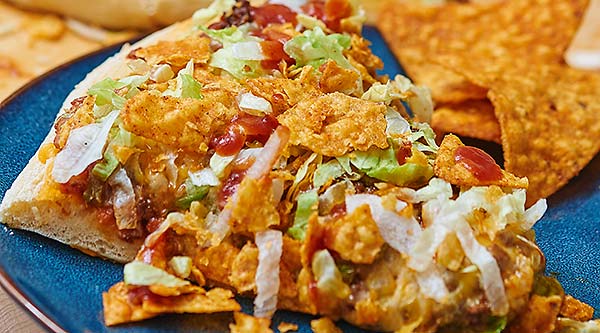
By a month in, Kyle and I had worked out something of a schedule, and things were settling into a new normal. His parents were up visiting from Texas, meeting their grandson for the first time, and things seemed to be going pretty well. One night, Kyle made dinner for all of us–his most delicious, caloric, cholesterol-laden dish, taco pizza.

taco-pizza-horizontal
(not exactly this,  but close)

As usual, the pizza was delicious, but that night, the pain showed up in my back again, the same spot as before. I assumed that it was just my body shifting back into its pre-baby position, but MAN did it hurt. And nothing touched the pain! I took extra-strength Tylenol and Aleve; I alternated between ice packs and heating pads; I slept on the couch watching a Robin Williams marathon so that I wouldn’t wake Kyle or the baby with my writhing. Finally, around 4 in the morning, the agony subsided and I fell into an exhausted sleep.

When I had a free moment the next day, I googled again. Once again, the results led me to believe that what I’d experienced was normal, that my body was just shifting back into place, that the pain would eventually subside.

The pain came again, shortly before my six week postpartum visit, and I brought it up with the doctor I saw–not my usual doctor, who was on paternity leave, but the doctor who delivered Sam. She told me it was perfectly normal and that some people kept having pain until at least six months postpartum. She said that I should notice the pain diminishing over time, and that it should be gone by that fall. That didn’t sound fun, but I still took her at her word and went home, preparing for more agony.

brace-yourself

And sure enough, it came. It came twice more, the second time by far the most incredible pain I’ve ever experienced, including childbirth. That second time, around Sam’s third month of life, I’d spent the day in Newport with my family and enjoyed a dinner of pasta with alfredo sauce. Kyle and I took shifts during the night watching Sam, so that we could each get a good ~5 hours of uninterrupted sleep; I’d been sleeping during Kyle’s shift for about two hours when the pain hit. It started out as the usual discomfort around my right floating rib, but it quickly became something far worse. I felt the desperate need to evacuate everything in my body and made multiple trips to the toilet. I couldn’t lie down. I couldn’t stand up. I was in more pain than I’d ever experienced in my life.

orbhzia(on a scale of 1-10, it was about a 300)

Around five or six in the morning, it started to subside, but I’d had enough. Kyle and I called my mother, and she came to the house to watch Sam; as soon as she arrived, we drove to our local urgent care clinic, and I had the first appointment of the morning.

I told the doctor about the pain, how long I’d been experiencing it, when it began, and so on. He sent me down for X-rays, just in case, but added that it sounded to him like I had a nasty case of gallstones and set up an appointment for me to get an ultrasound later that week for confirmation. Sure enough, lying in the same room where I’d learned that Sam was a boy, I learned that I had gallstones, hundreds of tiny ones that kept getting clogged in the duct that led to my liver. Those stones getting clogged caused the agony I’d felt; the ultrasound technician remarked that plenty of people thought they were having a heart attack when they got gallstones. I believed her.

Here was the funny thing, though: everyone who found out that I’d been pregnant before getting gallstones seemed unsurprised. “That’ll do it,” said the doctor, the ultrasound tech, the surgeon, the nurse who took my blood a week before surgery, the OR nurses who took care of me before and after the operation. As it turns out, pregnancy frequently causes gallstones–something about the excess estrogen in the bloodstream. Gallstones can cause elevated liver enzyme levels–something my obstetrician had suspected were caused by intrahepatic cholestasis of pregnancy–and it’s entirely possible they were causing me that pain and discomfort even before Sam was born.

And I had no idea! None of the websites or books I read ever mentioned anything about gallstones as something that could happen during or after pregnancy, even though they’re incredibly common. It was just so weird to me, and I wish I’d known about their likelihood beforehand. I might have been a little more mindful of my pain and a little less likely to dismiss it as “just normal pregnancy discomfort.”

I really have no idea how to wrap this up except by saying that if you have a gallbladder and have recently been pregnant, be mindful of any pain or discomfort you experience, and don’t write it off as “just postpartum pain.” If you’re experiencing pain that wakes you up, that keeps you from sleeping, that won’t go away no matter what you do, call your doctor and insist that they take you seriously. Nobody should live in pain if they don’t have to.

Easter and Tradition

Yesterday was Easter.

When I was a kid, we had a lot of Easter traditions. The day before Easter, we all piled into my parents’ minivan and trekked out to Hebert’s Candy Mansion in Shrewsbury, MA, for our annual purchase of Easter delights (Hebert’s has wonderful solid chocolate bunnies and probably some of the best tasting chocolate I’ve had in my life). Once we’d spent way too much money on sugary goods, we’d head home and dye eggs. My mother hard boiled a dozen large white eggs, and my brother, sister, and I sat around half a dozen coffee cups filled with vinegar and fizzing tablets intended to stain the eggs in red and blue and purple and green.

tumblr_nma5yc4zw51s2wio8o2_540

The next morning, we rose before dawn (we had to get all the Easter festivities out of the way before heading off to church) and typically went through an extended telling of the Easter story over breakfast before combing the house for hidden eggs and Easter baskets. The baskets were stocked simply: the candy we’d purchased the day before and maybe a simple gift, usually with a religious theme (one year, we all got Bibles; another year, it was all Christian literature. In contrast, though, one year, we all got small toys–my sister and I got My Little Pony bunnies and my brother got a toy train).

From there, the day varied year by year. Every year, we went to church. Some years, my siblings and I sang in a church chorus that my dad directed (I think they still have the video of all of us shriek-singing “Hear the Bells Ringing,” the congregation falling over themselves with laughter at the sudden bombastic increase in volume as we all exclaim, “JOY TO THE WORLD!”). Other years, we sniffled our way through a simpler service, all reminded that we’d inherited my mother’s allergy to Easter lilies. After church, we often had my mother’s family visit, which meant a lot of cleaning and cooking and prepping of our little house. At some point in the afternoon, my dad and my uncles went out into the yard and hid candy-filled eggs for the little kids to find and money-filled eggs for us big kids. It was almost always cold and rainy.

Kyle and I take a much simpler approach to Easter, owing at least partly to the fact that neither of us are really church-goers… and partly to the fact that Sam is still not quite three and has only the vaguest grasp of concepts like “Easter” and “candy” and “look for the eggs.” We don’t dye eggs because nobody in our house really eats hard boiled eggs, and we don’t really entertain, so those colorful eggs would end up sitting in our fridge until someone got fed up and threw them away. We do Easter baskets and candy eggs, mostly because Kyle and I only have one kid right now and we really like lavishing him with goodies.

(true story: Kyle has to hold me back from overspending on Sam’s Easter basket. I don’t go to the lengths of people who treat Easter as Christmas 2.0, but he’s reminded me on numerous occasions that both of us got maybe one or two trinkets for Easter and turned out just fine, and so Sam will turn out just fine if I don’t fill his basket to overflowing)

(other true story: Kyle really hates Easter grass, but Easter baskets look ridiculous without it. We tried to compromise this year by getting edible Easter grass, but it’s kind of like if raw spaghetti tasted like cotton candy. Sam wasn’t impressed, I’m not impressed, and I think Kyle’s going to end up eating all of it)

giphy-downsized-large
(yummy)

So it went this year. Sam had a modest basket filled with mostly candy and a few toys and books (namely, Darth Vader and Luke Skywalker action figures that are exactly the right size for his toddler hands; he hasn’t put them down since he plucked them from the basket). We got some oversized plastic eggs from Target and filled them with jelly beans and pastel M&Ms and chocolate bunnies wrapped in foil. I love dressing Sam up, so I got him some turquoise pants and a striped shirt from Old Navy, and he wore those to my parents’ house, where we all ate spaghetti and meatballs and watched a decade-old documentary on the making of Star Wars.

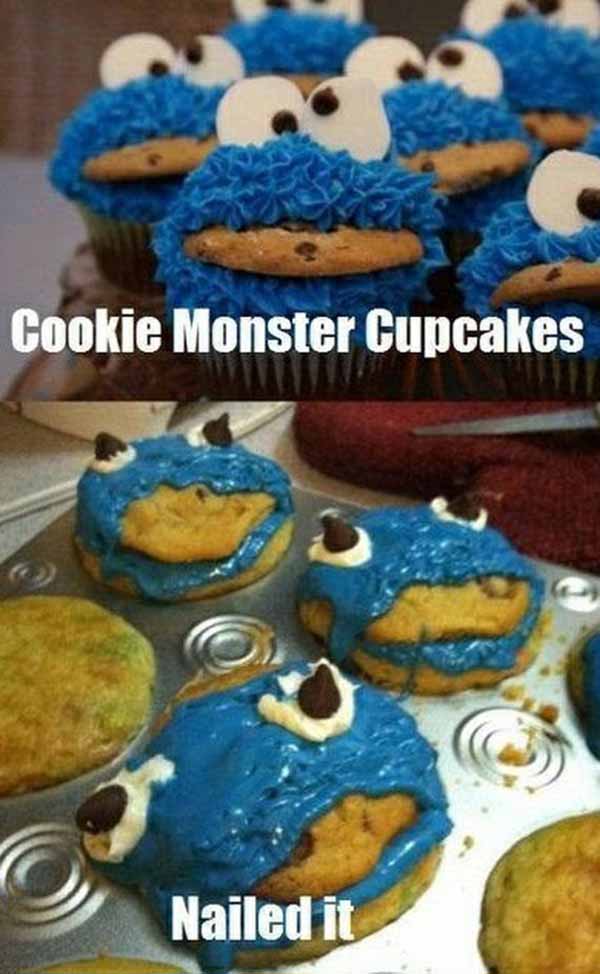
Oh, and I baked a cake that tasted “okay” and that looked like a frosting factory had a tragic accident. Suffice it to say that I will not soon be quitting my day job to be either (a) a Pinterest Mom, or (b) a baker.

ujfjp-pinterest20
(this happens to me with unerring frequency. Complex decoration is not my forte)

Holidays are honestly one of the more delightful parts of raising our own new family. We consider the traditions that we enjoyed as kids, discard the ones that don’t fit (dyeing hard boiled eggs) and keep the ones that do (the trip to Hebert’s, which is much less crowded at 10 a.m. a week before Easter than it is at 2 p.m. the day before Easter, let me tell you).

We create our own traditions, too. This year, I sort of invented a tradition that Sam isn’t quite old enough to understand yet: the Easter lobster. While we were at Hebert’s, Sam spotted a lollipop shaped like a lobster and dyed his favorite shade of cherry red. I’m horribly indulgent when it comes to holidays and Sam making cute faces at me, and so I bought it. I have no explanation, as of yet, for the Easter lobster; but you bet I’m going to buy a lobster lollipop for Easter every year until the day I die.

All of those traditions wrapped up together create our family identity, and what I really love is that a family identity in that sense isn’t limited to traditional nuclear families. It extends to found families, too. I love reading about my friends in their 20s who just live together as roommates and friends and are still pulling together found family traditions–dyeing eggs and giving each other Easter baskets and the like. And those traditions and identities, in turn, become part of your individual identity, and basically, humans are really cool in that way.

tumblr_o70qvw7kne1rmp2dfo1_500
(we’re all Tevye at heart, a little bit)

The upcoming months are free of any major holidays but are absolutely packed with things to do–Sam turns three on May 13, Mother’s Day is somewhere around there, we’re flying to Texas for a vacation on May 18, getting back in time for Memorial Day, then Father’s Day and Kyle’s birthday in June, and throw in a business trip for good measure. It’ll all finally calm down somewhere around Independence Day–a holiday for which our traditions mostly entail going to my uncle’s house for a cookout (for which I intend to bake something else) and then coming home, hot and exhausted, to watch Boston’s Pops Goes the Fourth! on television rather than in person, because I am not braving those crowds thank you very much.

And then long, hot, boring July and August and September, Renaissance Faires and Kat’s birthday and Halloween in October, all bleeding into a holiday season that stretches, for me at least, from October straight on through January. And then it all starts over again.

Hair!

I love getting my hair done, and I am absolutely blissful about the way mainstream fashion has embraced funky hair colors.

From the time I was about thirteen, I’ve always wanted to have purple hair in some way. When I was thirteen, that way recalled various anime heroines–a short black bob with long purple pieces in the front. Think something akin to Mako Mori in Pacific Rim. I just thought that was the absolute pinnacle of coolness (because it is), and though I wasn’t allowed to put purple streaks in my hair back then, I dreamed of the day when I could go absolutely nuts when it came to hair color.

tumblr_inline_n7peyn9wrf1qgp297
(were this a movie blog, I’d tell you how this movie taught me SO MUCH about visual storytelling, but it’s not a movie blog)

Purple was out, as I recall, because this was back before wild hair colors were mainstream enough that you could wear them to school or work without getting in trouble for being a distraction. Purple was out, but somewhere around my sixteenth birthday, bleach blonde was in. I remember sitting in the hair salon that I’d visited since I was eight, tears streaming down my cheeks as my hairdresser plucked strands of hair through a net to give me highlights. She kept accidentally stabbing my scalp, and oh my god, it hurt like you would not believe.

giphy6

But the results were utterly cool, in that late 90s, early 2000s way. Back then, everyone frosted their hair (that’s what we called it–frosted tips, which sounds so wrong now for some reason), and I was part of everyone. About five minutes into my freshman year of college, I chopped off the damaged bleach blonde hair, and the next year, I dove into the world of lowlights. In my mind, I wanted to look a little bit more like Kelly Clarkson at her Kelly Clarksonest.

grid-cell-11564-1452781238-14
(she is awesome, but why any of us late 90s, early 2000s kids thought this was a good look is beyond me)

Instead, I ended up with a deep mahogany wash that was SO CLOSE to the purple I’d always imagined. I loved that hair, and I stuck with the deep red for years after that. It was fun to play with, the color of cherries when the light hit it, almost black in the shadows. I could wear it all gothic and serious or I could wear it elegant, which I did for my wedding in 2011.

face

But. It still wasn’t purple. I loved it, but I still dreamed of purple, and that remained an impossible dream for a long time. Up until recently, the idea of working in corporate America with an unnatural hair color was absurd, to say the least. My dreams of purple hair were desperately at odds with my need to work for a living. Red was elegant and professional enough to allow me to blend in, but purple? Not a chance.

Things happened, though. My career came to a sudden halt when I was laid off from my first post-masters-degree job. I spent the next four years focused almost entirely on the business of getting pregnant, being pregnant, and raising a gleeful child. I couldn’t really afford to get my hair done for most of that time, and when I could, I stuck with a wash-cut-and-dry rather than anything particularly memorable. I didn’t see the point in doing much more, since my life was almost entirely indoors and away from anyone who’d care what my hair looked like.

635958148025281751-384828671_yang
(in case you are wondering, this is what experts call “depression”)

Last winter, prompted by Kat’s enthusiasm for getting her hair done (her hair is PINK. It’s also enviably thick and falls past her waist because Kat is unfairly gorgeous) and with Kyle’s encouragement, I finally made an appointment to get my hair purpled at a salon near my house. The whole process took a couple of hours, and my GOD, I was so happy with the results! It was a tame purpling, by most people’s standards: I just had them put a wash over my normal hair color, making it glint amethyst in the light. Still, I finally had my purple hair, and I was pleased as punch about it.

Meanwhile, there’s Sam.

Sam had his first haircut a couple of days after his first birthday. He has thick blonde hair that grows like a weed; by the time he turned one, you couldn’t see his eyes anymore. With his Nana along for moral support (and handholding), I took him to a cute kids’ salon in the same plaza as my usual salon. He cried the whole time, mostly out of confusion and concern, but afterwards, he looked so grown up and so handsome.

(I’m biased, I know)

We’ve taken him for regular salon trips since, roughly every six months to keep him from looking completely ridiculous. Our most recent hair salon trip was this weekend, and in excitement for that, he told me that he wanted to have red hair. Not ginger red, mind you. Fire engine red. Crayola red. Darth Vader’s lightsaber red.

ariel-playing-with-her-hair-in-the-little-mermaid
(Ariel red, I would have called it, but he is not me)

And, well, I obliged. 2017 is a rough time to be alive for a lot of reasons, but it’s also a pretty great time to be alive, if only because people have, by and large, stopped caring if you have funky hair, whether you’re almost-three or thirty-three. Sam wanted bright red hair, and he got it (albeit in the form of hair gel that washed out in the bath later that night, but still). If he wanted bright blue hair, I’d be happy to oblige him there, too. I love seeing him express himself, whether it’s by wearing three shirts to school (son, I have a lot of questions, but you do you), by taking fastidious care of his (and our) toe jam, or by getting streaks of primary colors in his hair.

red

As for me, I’ve been watching a woman who works in the same building as me for a couple of months now. She drives a bright yellow car with a license plate that says “B HAPPI,” and her hair is a fantastic shade of turquoise. I figure I’ll take her car’s advice, and with any luck, the salon will have an opening this weekend, and I’ll have purple hair again by next week.