In the late fall of 1989, my life changed forever.
I don’t remember the exact day, but I do remember I was with my Aunt Marianne and my cousin Nicole. It would have been around the midway point between our two birthdays, exactly one month apart (which is probably why it happened at all). I don’t remember anything about the experience except for the overall feeling I got from it, that this was the most important thing that had ever happened to me, that my life could now be broken down into before and after, that the after would forever be colored by this experience, for better or for worse.
I was six years old, just barely, and had just recovered from having the chicken pox (back in the days before the vaccine that I love forever, when we all suffered through oatmeal baths and skin so itchy we wanted to peel it off like bananas). I have only two clear visuals from that night. In one, I’m sitting in the back seat of my aunt’s car, riding through a dark night, my mind overfull with what I’d just witnessed.
And in the other? A little mermaid, having just met the love of her life, pushes herself out of the ocean as a wave crests behind her, promising that someday, she will be part of his world.

I was the exact target audience for this movie (as was my cousin, who was probably also six at the time, though I don’t remember exactly when we saw it… it may have been after her birthday, making her seven but still comfortably in the “ARIEL IS MY ENTIRE LIFE NOW” age range), and from that evening on, I wanted nothing more than to be a mermaid, specifically Ariel if I could swing it. I remember returning to school after seeing the movie and rejoining my group of playmates, most of whom were boys (because the year’s prior obsession was the Teenage Mutant Ninja Turtles, and they embraced my presence because it meant they had someone to play April, even if I would’ve given my left leg to be Raphael just once), and all of whom had seen the movie as well. Our experience was incorporated easily into our playground games, and I was the Ariel of our group, a role to which I so thoroughly committed that when we got inside after playing, I picked up a plastic fork from my lunch tray and began using it to comb my hair, to everyone’s amusement.
Since that point, I always come back to Ariel. For a while, I always said that my favorite Disney princess was Belle, as that seemed the mature answer that I should give. But if I were honest with myself, able to take off the mask of what was expected of me for a minute; if I’d said what was true instead of what I thought I should have said, I would always have said Ariel. I could give a million and one reasons for this, but I think it all boils down to that she hit that point in my psyche at the right age to just become embedded there.
Also her iconic “I Want” song couldn’t really be topped in terms of Disney songs that hit little girls right where they are until Elsa came along, let’s be real.

Ariel was on my short list of girl names and still remains there for the distant possibility that we’ll someday thaw one of our babysicles and turn our family into an even number. I kind of push my love for her onto the little girls I encounter in my life; when I babysat in high school, I gifted my charge a full Ariel costume as a going away gift when I had to leave for college, and now that I have a daughter of my own? Oh, it is on like Donkey Kong.
The original fairy tale is a tragedy, written by Danish author Hans Christian Andersen in 1837. Many of the story beats remain the same in this story, if not a bit gorier: mermaid loves the world above, saves a prince from drowning and falls in love with him, visits a Sea Witch to get human legs, has to make the prince fall in love with her or else doom. This version gives mermaids a bit more lore: they live for three hundred years and don’t possess souls but instead turn to seafoam when they die. When the mermaid takes the potion to make her human, it’s excruciating for her: she has her tongue cut out, feels as if a knife is cutting through her body, and feels with every step that she is walking on sharp knives.
(note that this is also how I feel with fibromyalgia)
But worse, in this version, she does not win her prince. He falls in love, instead, with a princess from a neighboring kingdom, whom he thinks rescued him. The mermaid knows that she will die the morning after his wedding, but as she is mourning his love and her own life, her sisters emerge from the sea with an offer for her: if she murders the prince with a dagger given to them by the Sea Witch, letting his blood drip on her feet, she will become a mermaid again and return to the sea for the rest of her days. The mermaid, however, loves the prince too dearly to cause him harm and instead throws herself into the sea, and although she dissolves into foam, she continues to exist as a sylph, with the chance to earn a real soul and ascend to heaven by doing good deeds for three hundred years.
(I’d say it’s not super family friendly, but then again, Disney came out with The Hunchback of Notre Dame seven years later, and that’s… well.)
We can dig into a couple thousand different iterations as to why Andersen wrote this story the way he did, but one of the most popular interpretations is that it served as both a metaphor and a love letter to a man for whom he pined, Edvard Collin. Andersen himself refused to engage in sexual relationships for a good portion of his life but nevertheless had powerful romantic feelings throughout for both men and women. Of Collin, he wrote, “I languish for you as for a pretty Calabrian wench…my sentiments for you are those of a woman. The femininity of my nature and our friendship must remain a mystery.” Andersen also sent a first copy of the story to Collin, who was unable to return the author’s affections, a fact that caused Andersen a great deal of heartbreak.
Fast forward to roughly 1987. Titan Disney directors John Musker and Ron Clements (known also for Aladdin and Moana, among others) recruited songwriter Howard Ashman to help with their film treatment of The Little Mermaid after Ashman contributed a song to Oliver & Company–and much of what made The Little Mermaid stand out as a film was Ashman’s work: the fact that it’s a musical, Sebastian’s Jamaican accent, and of course the iconic songs. Ashman himself was a gay man and was diagnosed with HIV/AIDS during production on The Little Mermaid, eventually passing away in March of 1991.
And here we are now, nearly 40 years later, and most of Disney’s releases are absolutely unnecessary live action remakes. They are transparent cash grabs and they are almost never actually any good. Even the best among them (strictly Maleficent and Cinderella, the latter largely because Cate Blanchett is a goddess who can do no wrong and the former because it actually gave me a singular feeling) suffer from the ailment of being wholly unnecessary, save for copyright extension and Disney raking in additional dollars, which the cynic in me refuses to give them unless they come up with something that really hits me where I live. The CGI is almost always excruciating, taking the color and joy of the originals and dragging it to a muddy uncanny valley. So many of these live action remakes border on shot-for-shot remakes of the originals, and again, it begs the question of why does this exist at all? If you’re just going to do something that’s just like the original but an inch to the left, why bother?
That inch to the left in most of these remakes is typically an inch in one of two directions. On the one hand, you have superficially progressive changes. I won’t get too much into those, at the risk of sounding like certain Florida governors, but suffice it to say that I choose the word “superficial” for a reason. The other direction is to close perceived plot holes and complaints from various pseudo intellectuals who don’t like to suspend disbelief in order to enjoy a fairy tale. Like sure, it’s weird that the villagers in Beauty and the Beast have forgotten about the nearby castle with a prince in it within the span of ten years, but that’s not the point of the story even a little bit? So honestly, who cares?
The sorts of fundamental changes that would justify the existence of many of these remakes are simply not something that interests Disney, and far too often, the remakes are literally just the same thing because they’re wholly risk-averse. These films end up not being the tentpoles you find from a Marvel release or from the newest animated feature but rather a middle of the road steady source of income that Disney can use to fund the more expensive of their projects (or line their shareholders’ pockets) without having to do too much work. And that’s all the Mouse really wants from them, so they’re somewhat immune to complaints about the films’ mediocrity (or even the films’ outright badness) because they’re making money. Maybe not to the tune of billions, but enough that from a shareholder perspective, their existence remains justified.
Which is to say that I usually have negative interest in these films, and that was going to be true of The Little Mermaid as well. The 1989 film has been part of my marrow since its release, and although I had full confidence in Halle Bailey to perform excellently as Ariel (spoiler from later in the review: she does and then some), I take issue with these films’ existence in the first place. I will defend the casting of a black woman as the titular mermaid to the death (because mermaids do not exist, black people can have red hair, and literally who even cares, it’s a movie, get a life), but the movie existing in the first place is a more difficult hill to climb. And the idea of giving Disney any money to see this blatant cash grab was anathema to me except…
…well, I have a five year old daughter. And she saw the trailer one day.
From roughly the moment she heard the opening notes to “Part of Your World” as sung by Halle Bailey, she was hooked. “Mommy,” she said to me solemnly, “I need to see Ariel.”
She had, of course, already loved Ariel. In her trio of favorite princesses/Disney royals, Ariel shared billing with Elsa and Rapunzel (a fairly common trio among the girls of Generation Alpha, I’ve discovered). This past December, when we took a family trip to Disney World, an exquisite cast member pulled Carrie aside for a complimentary five minute photo session in her Ariel costume (turquoise to match the look of Ariel in the parks), and to call it magical would be severely understating the matter.

So although I had no interest in the new, live action Little Mermaid (so unnecessary), I found myself in the position of having a five-year-old daughter who had The Most Interest in seeing the movie and, because he must do everything she does, a five-year-old twin brother who was intrigued by the concept of both the movie and cinema in general. And with the twins having a half day on the Friday preceding Memorial Day…
Well. Here I am, having seen the movie, and here you are, reading about me seeing the movie. In essay form because I can never do things simply.
(and, as a caveat, this review/essay is going to miss a fairly large chunk of understanding about the middle of the movie because the five-year-old brother remarked at the five minute mark, “This video is really long!” started asking if the movie was finished at the ten minute mark, and started doing laps around the theater at the 45 minute mark. Did I chase him and disrupt all ten of my fellow movie-goers’ experience by doing so or did I let him flee through the darkness unabated until he wore himself out for the climax, not caring as long as he stayed [a] where I could see him, and [b] not on top of other people? That’s for you to decide, dear reader, but regardless, I did not see much of the middle of the movie)
(also this review is going to contain spoilers, so if you want to be surprised by the changes Disney made to the movie, you can stop reading now)
This particular addition to Disney’s live action lineup continues the trend of not reinventing the wheel; they know what works about the original and, by and large, they stick with it. Of the film’s missteps, perhaps the most egregious is the casting and performance of Javier Bardem as King Triton. I don’t know if this can be chalked up to poor direction or Bardem mistakenly taking a horse tranquilizer before delivering his lines, but the man sounds like he’d rather be doing anything other than acting as the king of the sea. The only scenes in which he really delivers are the few times he has to act menacing, and that menace is wholly subdued, as if this is a Coen Brothers film instead of Disney milking a cash cow. When you’re doing menace for Disney, especially if you’re in a live action version of a cartoon, you need to make it huge. It’s a stage acting moment rather than a film acting moment, and if you keep things low and subtle, you just look like you could’ve been replaced by a cardboard cutout and had the film actually improve.
I found this particularly frustrating as the heart of the original 1989 film is not, in fact, Ariel’s struggle (although she is my favorite, she remains pretty static: she wants the same thing at the beginning as at the end and gets it without going through too much personal growth in that particular area) but Triton’s. Ariel is his youngest daughter (and, it’s implied through several of the sequels, including this version, reminds him the most of his deceased wife), and his primary conflict in the original film is in recognizing that she is growing up and that he has to let her go, that his tight and protective grip on her is driving her away rather than teaching her to make safe decisions. He recognizes through the course of the film that while the stupid decisions (and they were dazzlingly stupid) may have been Ariel’s, he’s still her father and that the responsibility for helping her grow while ensuring she does so safely is squarely on his shoulders. By the end of the film, when he grants her dearest wish and transforms her into a human, it’s because of his own growth, not hers.

I think? this relationship is supposed to be in the new film as well, but unfortunately, Bardem’s utterly wooden acting makes it fall flat. Triton does express regret for the way he reacts to Ariel’s actions (from skulking around the shipwreck graveyard to having a grotto full of human stuff), but again, it’s such a subtle regret that he might as well be thinking, “man, I should not have had the chicken of the sea for dinner.” I kept rooting for him to emote more, and I kept finding myself disappointed, to the point that when he was disintegrated during the climax (a change from the original, in which he simply turned into kelp–the PG movie versus the G movie, I guess), I breathed a sigh of relief.
The other area in which the film fell flat came from some of the CGI. Not all, fortunately, because this isn’t Dumbo, but some.

In particular, the trouble comes from Ariel’s sea creature friends and from the giant Ursula at the climax of the film. The sea creature friends–Flounder, Sebastian, and Scuttle–are, as far as I remember, the only non-mermaid creatures that talk under the sea (cue steel drums), and it’s. Well. Flounder looks, unfortunately, like he’s a few days deceased and being sold for a deep discount at the local Wegmans. Sebastian fares slightly better, but in trying to make him look more realistic, most of the emotive nature of his traditionally animated counterpart disappears. Of the three, Scuttle suffers the least, likely because birds are easier to make seem realistic and emotive, but even she (gender bent in this version so that Awkwafina can voice her) misses a lot of the magic of Buddy Hackett’s 1989 Scuttle. This particular issue unfortunately also affects what should be the biggest ensemble number of the film, the classic “Under the Sea.” In the original movie, this song is an exciting celebration that makes even the most miserly among us dance in their seats; here, it feels more like it’s being sung by a choir who can’t get their heartrates above a certain level, lest they explode. It’s very soothing, but it’s not supposed to be.
Ursula’s transformation suffers from a slightly different problem: it’s muddy and messy as fuck. And that’s particularly unfortunate because Melissa McCarthy absolutely owns the role (more on that once I’ve gotten my complaints out of the way). The towering, cackling Ursula, crowing that she’s the ruler of all the ocean in the 1989 film is deliciously scary; even though she’s clearly two-dimensional, the storms she creates in the sea while lording over our heroes feel entirely real, and her bellowing taunts made little me watch the climax through my fingers. In this version, however, it feels as if Melissa McCarthy recorded the final lines while driving down the highway or otherwise distracted. The towering Ursula doesn’t look so much like the villainess in question but rather like a particularly frightening thunderstorm. And that may have been intentional on the filmmakers’ part, but if so, I heavily disagree with the decision. Ursula is absolutely one of the best Disney villains of all time; let her shine in her enormous moment of triumph! Don’t drown her in this muddy, grubby, cloudy mess!
But. All that said.
I actually really liked this movie.
It certainly doesn’t feel any more necessary than the other remakes, and it doesn’t come close to the original (though that may be just my nostalgia talking), but it’s delightfully fun. Although the CGI sometimes chains it to the stone of realism, the story and acting of the leads allow it to reach the surface again and become as colorful and exciting a film as it can possibly be.
In particular, Halle Bailey is utter perfection as Ariel. Her voice is powerful and utterly gorgeous; she hits “Part of Your World,” the original “I want” song, out of the park, not just in its original incarnation but in all three (yes, three) reprises. Though she tends towards a gentle wistfulness and curiosity, she seamlessly turns up the volume to desperation and passion for the human world that isn’t simply tied to the cute prince she saves from drowning. When she sings of how much she’d “love to explore that shore up above,” it pierces the heart and makes you want to take her by the hand and help her ashore; later on, the iconic “splash” scene (in which Ariel sings of her love for Eric while waves crash behind her) feels even more powerful than it did in the original (and no shade whatsoever to the original, but damn, Halle Bailey).
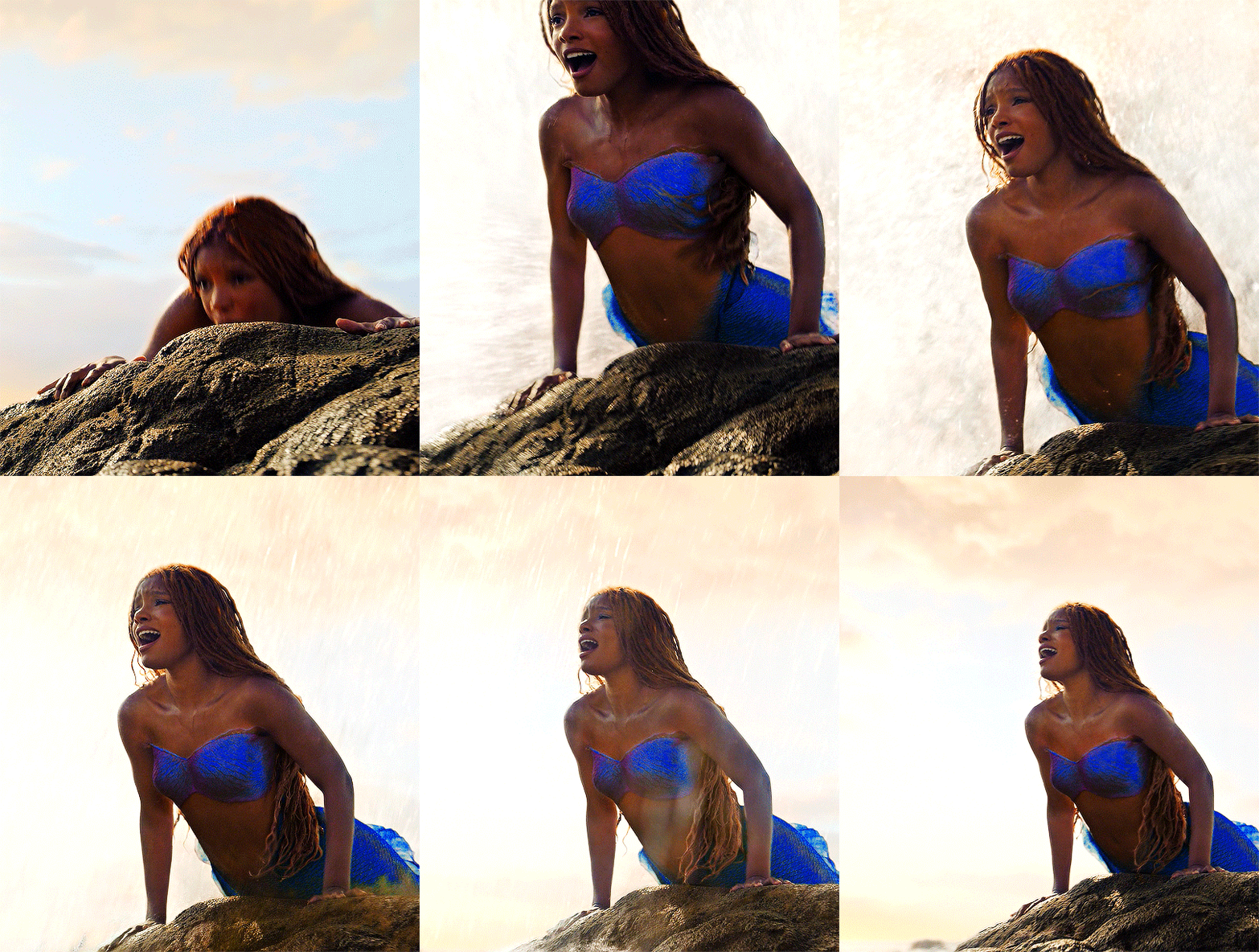
Delightfully, Ariel is also allowed much more growth in this film than in the original. For one thing, she’s not explicitly sixteen years old as she was in 1989, making those of us who roll our eyes when the original mermaid argues that she’s “not a child anymore” at sixteen breathe a sigh of relief. Even after meeting her prince, Ariel is more interested in the human world as a whole than in the prince himself, and her disappearance at the end of “Under the Sea” is not to croon around a statue of Eric but rather to go and scavenge the wreck of his ship for human stuff that hasn’t yet begun to decay. Towards the climax of the film, when it seems all is lost, she lies on the rock where she’d previously sung her dreams, cradling a gift from Eric and reflecting on everything she gave up, only to end up losing in the end. This particular reflection isn’t as explicitly present in the original, and it’s good to see here, that Ariel’s heartbreak in that moment isn’t simply because she’s lost the love of her life but because the enormity of what she’s given up for that moment finally catches up with her.
In this version, too, it’s entirely understandable that Ariel wouldn’t have that moment to reflect until Eric sailed away with his villainous bride-to-be (it’s Ursula in disguise, in case you’re new here), as every other second she has on land is spent developing an actual relationship with Eric, one built less on “wow, she’s cute” and more on “we’re teaching each other amazing things, we both love to learn and explore the world, our curiosity is going to drive us into each other’s arms and then the sky’s the limit.” Throughout her time on land, Ariel shows that she’s capable of communicating with Eric even without her voice (more on that in a minute): she teaches him to make music with a conch shell, helps him choose a hat from local villagers (in a village now located on a Caribbean island instead of “vaguely near Denmark”), pores over maps with him, learns to drive a carriage properly (and without the unhinged look of the original Ariel as she took the reins). The crush aspect of their relationship is absolutely present, but it blossoms into the most wonderful kind of crush: one that grows easily into real love because of how well the participants gel with each other. Their kiss–when it finally comes–is more than well earned.
Eric gets significantly more development in this version as well, no longer simply the proto-Aladdin of the 1989 film (handsome enough but doesn’t really have a huge personality, per se) though still significantly less interesting than Ariel. Rather than existing simply as an object that exists to push Ariel to chase after her dreams of being human, Eric has dreams of his own: to improve relations with the neighboring islands, to explore the world outside of his palace, to really understand more than just his own point of view. He and Ariel have this in common, and it forms the foundation of their relationship, once the magic of her siren song has faded.
Which, yes, Ariel’s voice is more than just the prettiest in the sea in this version! Mermaids have a gift, you see–their siren song, which the humans in the film explain early on can drive people to early and watery graves. In Ariel’s case, she uses her song to call Eric back from the brink of death after she rescues him from the shipwreck; this, in turn, forms the basis for his obsession with the woman who rescued and sang to him, rather than a Cinderella-esque search for someone whom he only knows by one trait. It also lends some weight to Ursula’s insistence that Ariel give up her voice to become human: in this case, her voice isn’t only her means of communication but a power that she can use to shift the odds in her favor. Without it, she’s forced to rely entirely on who she is and what she and Eric have in common, giving their relationship a far more solid foundation than it appears to have in the original.
And speaking of Ursula…
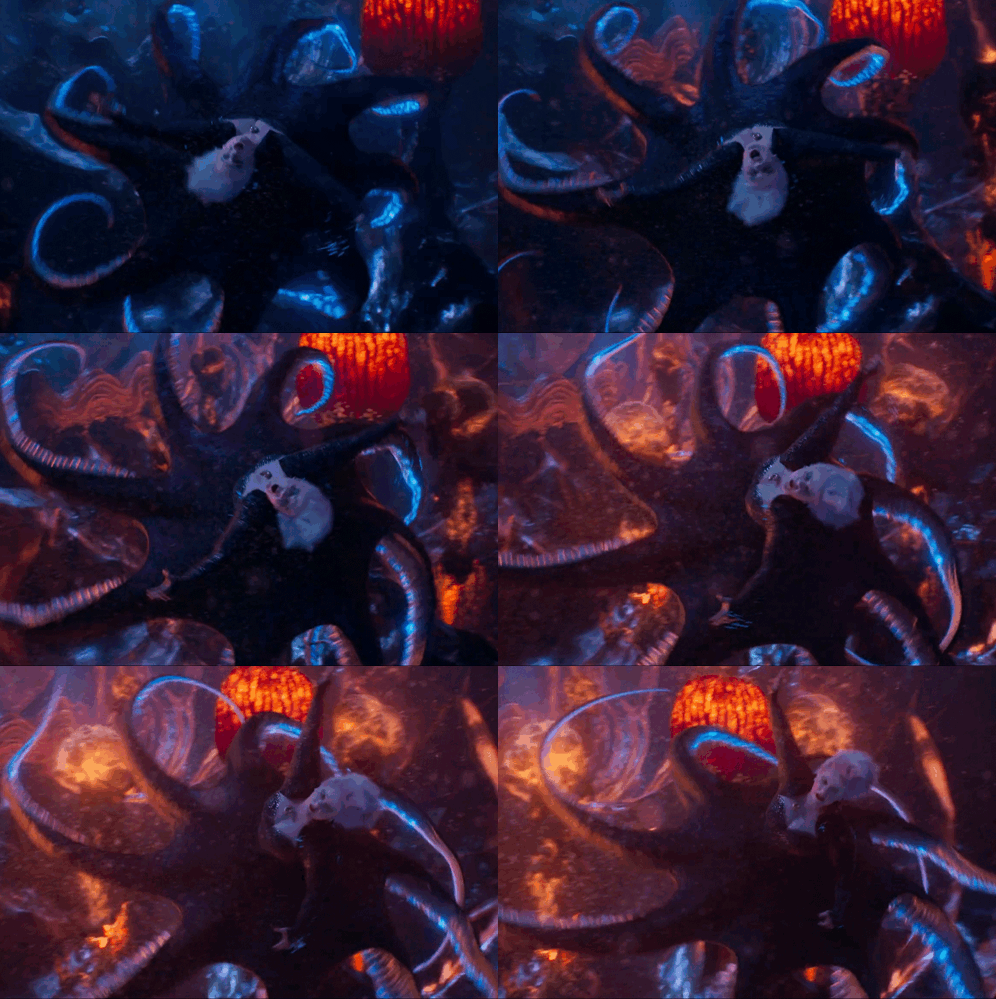
Melissa McCarthy is typically a delight onscreen, and this film is no exception. She seems to know that, in being cast as Ursula, she is living the dream of so many of us who grew up obsessed with this movie and gradually switched from belting out “Part of Your World” in the shower to cackling our way through “Poor Unfortunate Souls,” and, in knowing how lucky she is, truly owns the role. Her performance is obviously inspired by and an homage to the late Pat Carroll (whose 1989 Ursula still sends a chill down even the most stalwart spine), but she also manages to add her own saccharine coating to so many of the lines, manipulating Ariel in a more unctuous way than her predecessor. When she convinces Ariel to take her deal, it’s not by floating images of Eric’s face in front of her but rather by echoing Triton’s demand that Ariel never leave her ocean home again, suggesting that if this little mermaid doesn’t get her legs now, she’ll be trapped beneath the sea forever. With that, she doesn’t need to argue that Ariel can totally use body language to seduce the prince; she simply points out that she’s offering an escape from the prison in which Ariel finds herself, and it’s delightfully effective.
Ariel is allowed to say “no” to the deal, initially, though she changes her mind quickly, and instead of signing a contract, she provides one of her scales and a drop of her blood (which felt like a response to the pedantic question of “well, why doesn’t she just write Eric a note?” that arises in response to the original). Our modern Ursula proves herself that much more sinister as well by adding a new component to the spell: Ariel can’t remember that she needs to get Eric to kiss her, and when her companions bring up the idea, it slips from her mind immediately. It almost makes it seem like Ursula is doing Ariel a favor: without the desperate impetus to get a kiss by the third day, without her siren song to work her magic, Ariel and Eric fall in love the old fashioned way, as if they have all the time in the world. Thus, when Ursula decides to take matters “into her own tentacles” towards the end of the film, it’s with the realization that only magic could distract Eric from the burgeoning relationship he has with Ariel.
Despite the muddy CGI, the climax is as intense as in the 1989 film (at least if you judge by the way my five-year-old daughter watched through her fingers and my five-year-old son stopped running around to stare at the screen with wide eyes and jaw dropped). Ursula raises ships from their watery graves, and delightfully, it’s not Eric who steps in to save the day this time but Ariel herself. The sea tosses Eric around like a ragdoll (bless him), but Ariel masters it and pulls herself across the deck of the ship, wrenching the wheel in a last minute turn, the way Eric did earlier in the film, and impaling Ursula on its bowspirit (there’s your new sailing word for the day, it means “the pointy thing at the front of the ship”).
In 1989, this was the end of things with little other discussion to be had. King Triton returned to his mer-self and took up his trident, and after realizing he had to let Ariel go, gave her legs (her pose in that scene is homage to the Little Mermaid statue in Copenhagen–which, by the way, if you’re ever in Copenhagen, know that the statue is not in the big harbor but in a much smaller harbor that’s actually a beautiful park filled with murderous swans), and then we had a finale. Here, however, the central conflict of the film doesn’t go away with Ursula. The problem is that while Eric and Ariel love each other, they come from different worlds; the old, “a bird may love a fish, but where will they build their home” problem. Eric’s mother, the queen (a new addition for this film), expresses her understanding of his love and regret that he and Ariel simply can’t make it work as things stand (and swim) in that moment.
This theme brings the film closer to the original Hans Christian Andersen story than its 1989 predecessor, where the heart of the conflict is less that a father needs to let his daughter grow up and more that the mermaid and her beloved prince occupy different worlds, much as Andersen and Collin did in the early 1800s. And therein lies the magic of this remake: Ariel gets her legs, and not only gets to live in Eric’s world but gets to keep her family and connection to the sea as well. More cynical critics often complain about this “sanitized” happy ending in comparison to the original story, but it hit me for the first time watching this film how powerful the happy ending really is. Hans Christian Andersen, a bisexual man, wrote the original tragic tale knowing that no, he could never be part of Edvard Collin’s world, not really. Howard Ashman, a gay man diagnosed with HIV/AIDS during the production of the 1989 film, must have known this when he wrote the ending where the little mermaid finally got her prince, granting happiness to Hans Christian Andersen more than a century after his death. It’s a promise that while queer love seemed doomed in media for centuries, it could also be happy and could change the worlds in which its participants live.
Ultimately, this film is as unnecessary as the other live action remakes, but then, what film truly is necessary? If these live action remakes must keep happening (and, based on reports out of Disney studios, they must… I dread inevitably seeing the CGI version of Stitch), they would do well to aspire to reach this quality. It was not a perfect film by any stretch of the imagination (someone please make sure that Javier Bardem is okay, I really am worried about him), but despite its flaws, it gave me a new perspective on a story I’ve loved since I was a child. More importantly, it inspired my daughter the way the 1989 film inspired me; she left the theater saying, “Mommy, I love this Ariel” and spent the next several days singing “Part of Your World” as she went about the daily business of being five.
And really, I can’t ask for much more from a Disney film.
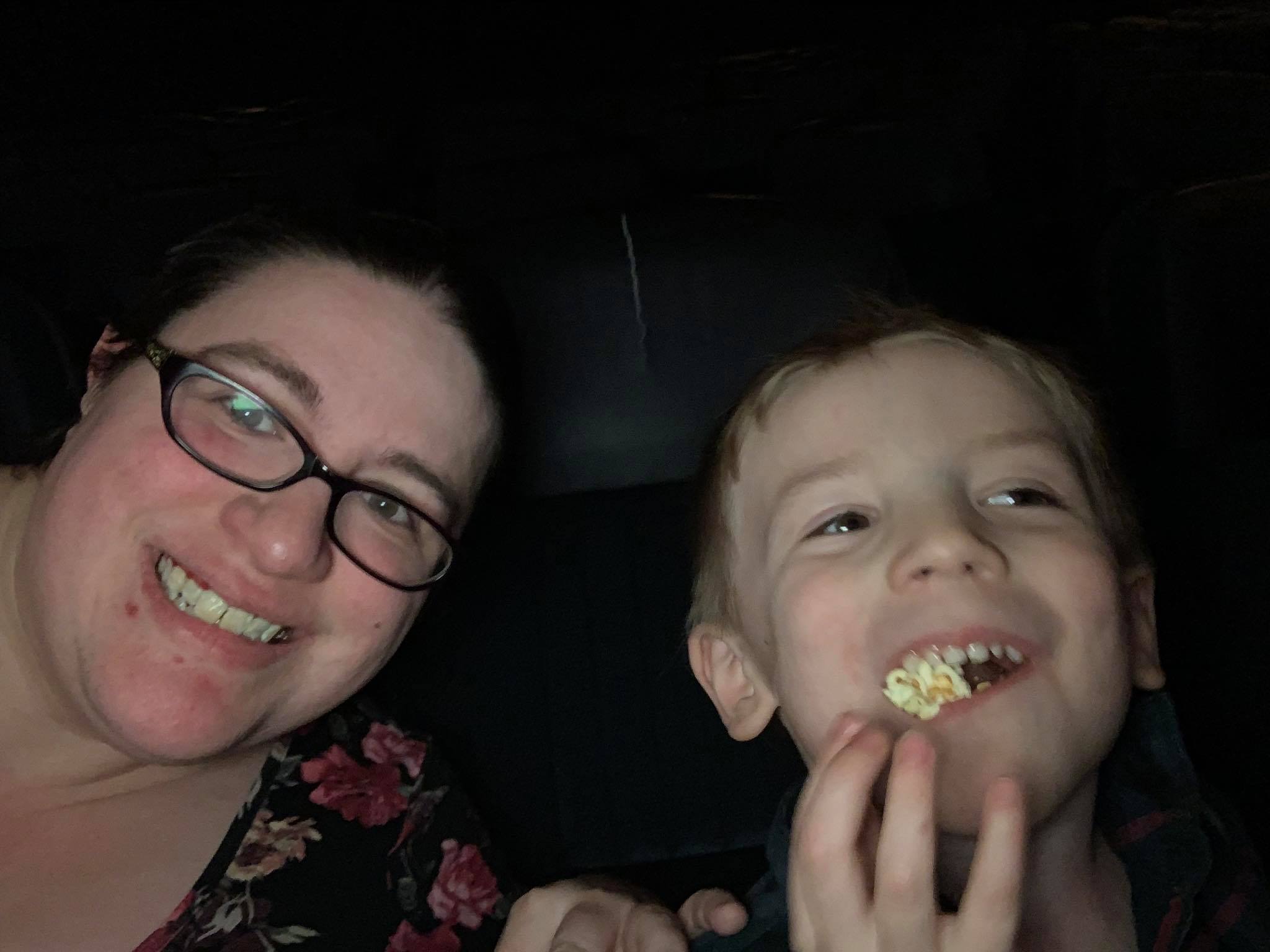 (at the movies; ignore the grotesque stress breakout on my chin)


 Love, Science & Nat 20s